Harvest of the Month: Corn
Click buttons below to explore other summer fruits and veggies:
Facts
Nutrition and Seasonality
Key Nutrients
- Folate – Helps prevent birth defects, is needed to make DNA, and helps your cells divide, including red blood cells.
- Fiber – Keeps digestion running smoothly.
- Vitamin C – Helps wounds heal, is important for the immune system, and is an antioxidant, which protects our cells from damage.
Seasonality
- Fresh sweet corn is available in Wisconsin from July through September.
Try New Foods
Sometimes liking new foods takes time. Children don’t always enjoy new foods right away. Offer new fruits and vegetables many times, and serve them in a variety of ways.
Corn can be eaten fresh, frozen, canned, on the cob, as cornmeal, polenta, tortillas, cornbread, or corn pudding.
- Select: Sweet corn is available fresh, frozen, and canned. If selecting fresh corn, choose ears with bright green husks, fresh silks, and tight rows of plump kernels.
- Store: Refrigerate corn with husks on and use within 1-2 days.
- Prepare: Peel husks and silks from ears of corn. Break off the stalk at the base of the ear of corn. Rinse under cool running water. Boil, microwave, grill, or roast!
Add Lettuce to Your Favorite Family Meals
- Add frozen corn to chili or chowder.
- Make a delicious salad with corn, black beans, onions, tomatoes, peppers, cilantro, lime juice, olive oil, garlic, cumin, salt & pepper.
- Add fresh or canned corn to guacamole or taco salad.

Books
- Carlos and the Cornfield / Carlos y la milpa de maiz by Jan Romero Stevens
- Corn is Maize: The Gift of the Indians by Aliki
- Four Seasons of Corn: A Winnebago Tradition by Sally Hunter
- Corn by Gail Gibbons
Try a New Variation of Corn on the Cob
- Rub cooked corn with lime wedges, a sprinkle of chili powder and a dash of salt.
- Lightly coat with a little butter or olive oil. Sprinkle cayenne pepper, cumin, and garlic salt. Add a dash of bottled hot sauce.
- Coat very lightly with butter. Sprinkle with freshly chopped basil, cilantro, or dill.
Garden Connection
Planting
Sweet corn needs warm weather to grow. Plant the corn kernels (seeds) ½ inch deep in cool, moist soil or 1-1½ inches deep in warm, dry soil. Space kernels 9-12 inches apart. Plant 2 or more rows of the same variety so that the corn is pollinated. Space rows 30-36 inches apart.
Harvesting
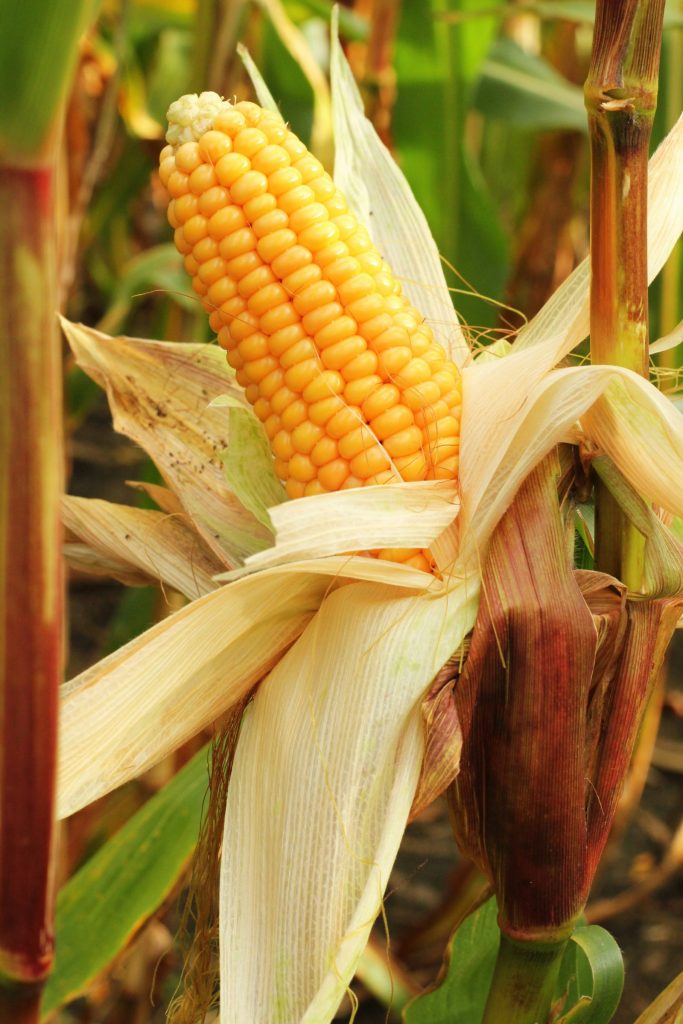
Each cornstalk should produce at least one large ear of corn. Under good growing conditions, it may also produce a second ear. Pick sweet corn during the “milk stage” when the kernels are formed, but not fully mature. The kernels are smooth, plump, and the juice in the kernel appears milky when punctured with a thumbnail. To harvest, snap off the ear by hand with a quick, firm, downward push, followed by a twist and pull. The corn should be eaten as soon as possible.