Harvest of the Month: Asparagus
Click buttons below to explore other spring fruits and veggies:
Facts
Nutrition and Seasonality
Key Nutrients
- Folate – Helps prevent birth defects, is needed to make DNA, and helps your cells divide, including red blood cells.
- Vitamin C – Helps wounds heal, is important for the immune system, and is an antioxidant, which protects cells from damage.
- Vitamin K – Needed for blood clotting, preventing excessive bleeding.
Seasonality
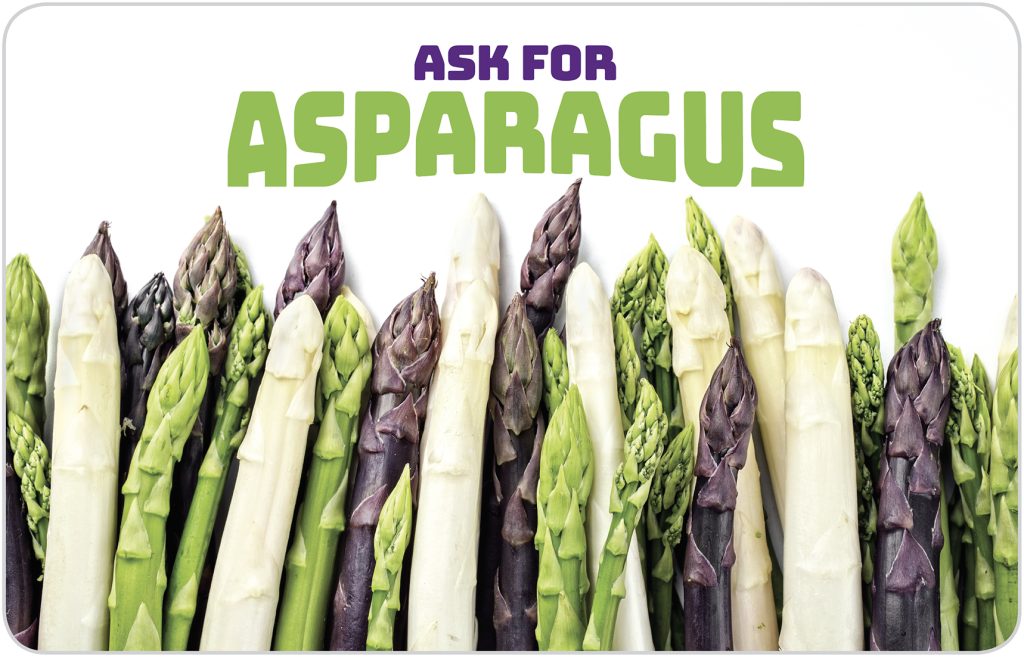
- Fresh asparagus grown in Wisconsin is available in May and June.
Involve Your Children in Cooking
Children can:
- Sprinkle salt, pepper, or garlic
- Rinse asparagus under cool water
- Snap off the woody ends
- Break asparagus into pieces
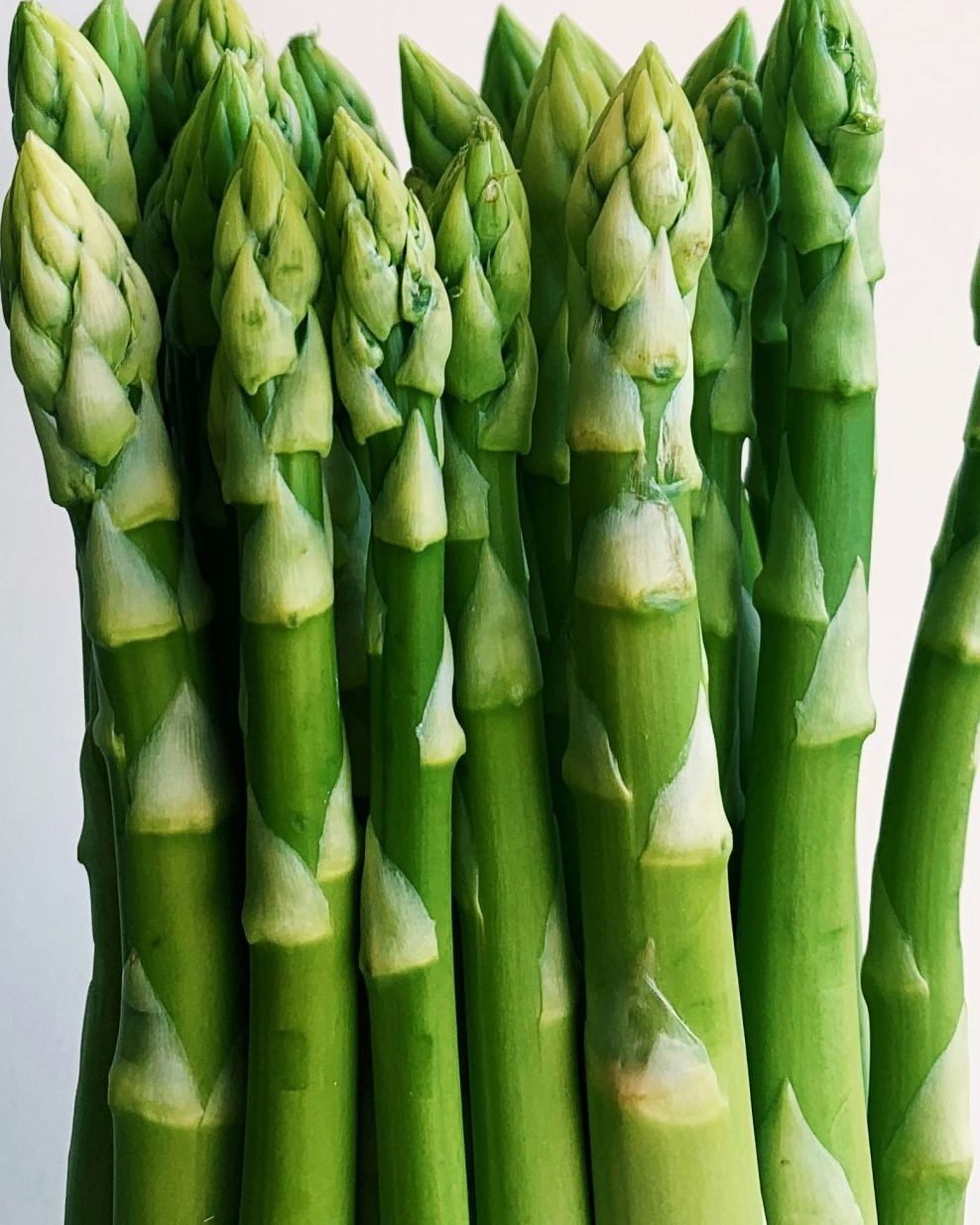
- Select: Choose asparagus stalks with dry, tight tips. Avoid limp or wilted stalks.
- Store: Wrap the ends of stalks in a wet paper towel and place in a plastic bag. Refrigerate for up to 4 days.
- Prepare: Snap off the woody ends, about 1-2 inches. Enjoy raw, steamed, boiled, grilled, or roasted.
Add Asparagus to Your Favorite Family Meals
- Add bite-size pieces of asparagus to creamy soups.
- Dip asparagus spears in a healthy dip or dressing.
- Use leftover cooked asparagus in your scrambled eggs.
- Add asparagus to roasted potatoes, rice side dishes, or pasta salad.

Books
- Inch by Inch: The Garden Song by David Mallett
- The Mighty Asparagus by Vladimir Radunsky
- Ryan and the Asparagus by Mathew Horejsi
- The Vegetables We Eat by Gail Gibbons
Kid Approved Roasted Asparagus
- Rinse asparagus spears and trim the ends.
- Asparagus is ready when it is tender.
- Spread out on a foil-covered baking sheet.
- Drizzle with olive oil and sprinkle with salt, pepper, and minced garlic or garlic powder.
- Roast at 400°F for 10-15 minutes.
Garden Connection
Planting
Asparagus plants are usually grown from one-year-old crowns (an underground stem). This provides a crop more quickly than if asparagus is grown from seed. Plant asparagus early in the spring. Asparagus requires about three years from the time of planting to establish permanent roots and produce quality spears. If uncut, the edible stalks develop into fern-like plants in warmer temperatures. In the first year, it is essential for ferns to develop and for the spears to be left unharvested so the roots can develop. Asparagus will return every year for 20 to 30 years!
Harvesting
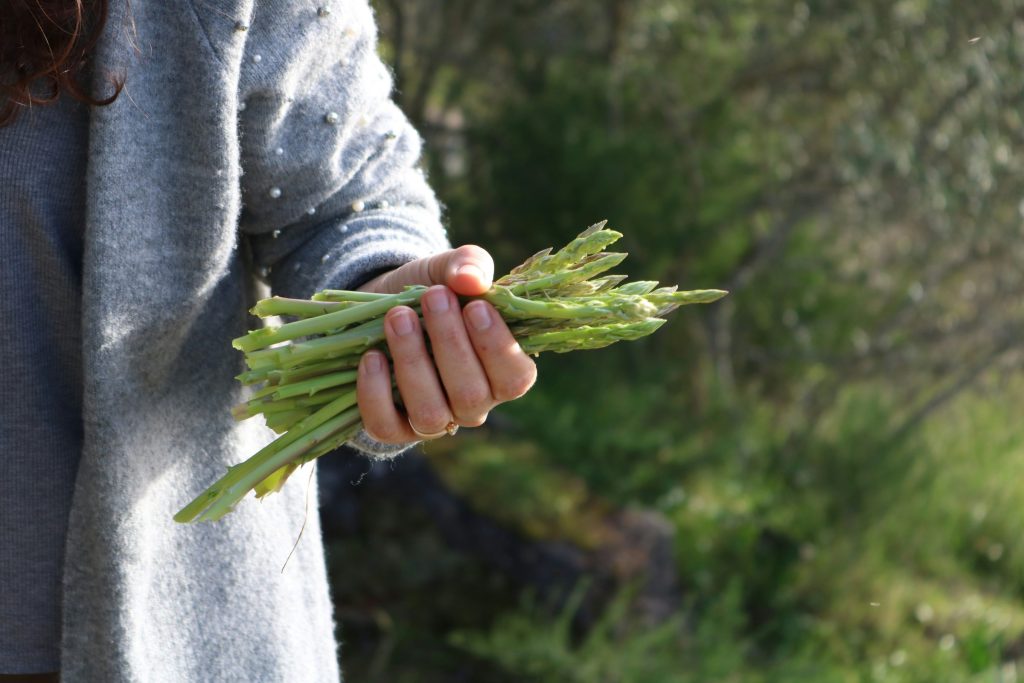
Harvest asparagus in the late spring and early summer. It is best to wait until after the third year of growth to harvest your first crop. Snap or cut spears close to the ground that are pencil-thin and 5 to 8 inches long. Refrigerate asparagus for up to four days by wrapping the ends of stalks in a wet paper towel and placing them in a plastic bag.