Harvest of the Month: Apples
Click buttons below to explore other autumn fruits and veggies:
Facts
Nutrition and Seasonality
Key Nutrients
- Fiber – Keeps digestion running smoothly.
- Vitamin C – Helps wounds heal, is important for the immune system, and is an antioxidant, which protects cells from damage.
- Potassium – Helps maintain normal blood pressure.
Seasonality
- In Wisconsin, apples are typically ripening and ready to pick in late August through October.
Trying New Foods
Children are more likely to try new foods if they help prepare them.
Children can help prepare homemade applesauce by mashing the cooked apples.
This is a pre-existing electronic document and is not accessible. PDFs are intended for print. To request an accessible version or a reasonable accommodation due to disability, please email emily.latham@wisc.edu.
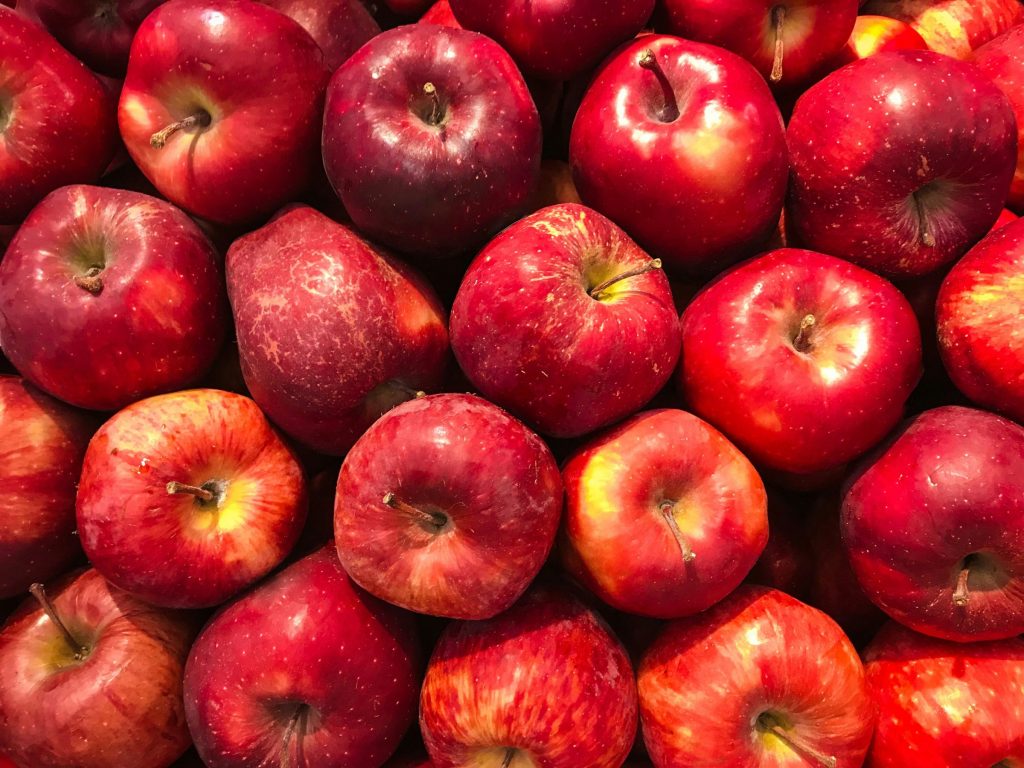
- Select: Choose firm apples with smooth and shiny skin.
- Store: Refrigerate in a plastic bag for up to 3 weeks.
- Prepare: Eat whole or sliced. Leave on the skin for extra nutrients!
Add Apples to Your Favorite Family Meals
- Mix apple chunks into your hot cereal.
- Pair apple slices with cheese.
- Add thin apple slices to chicken salad or peanut butter sandwich.
Books
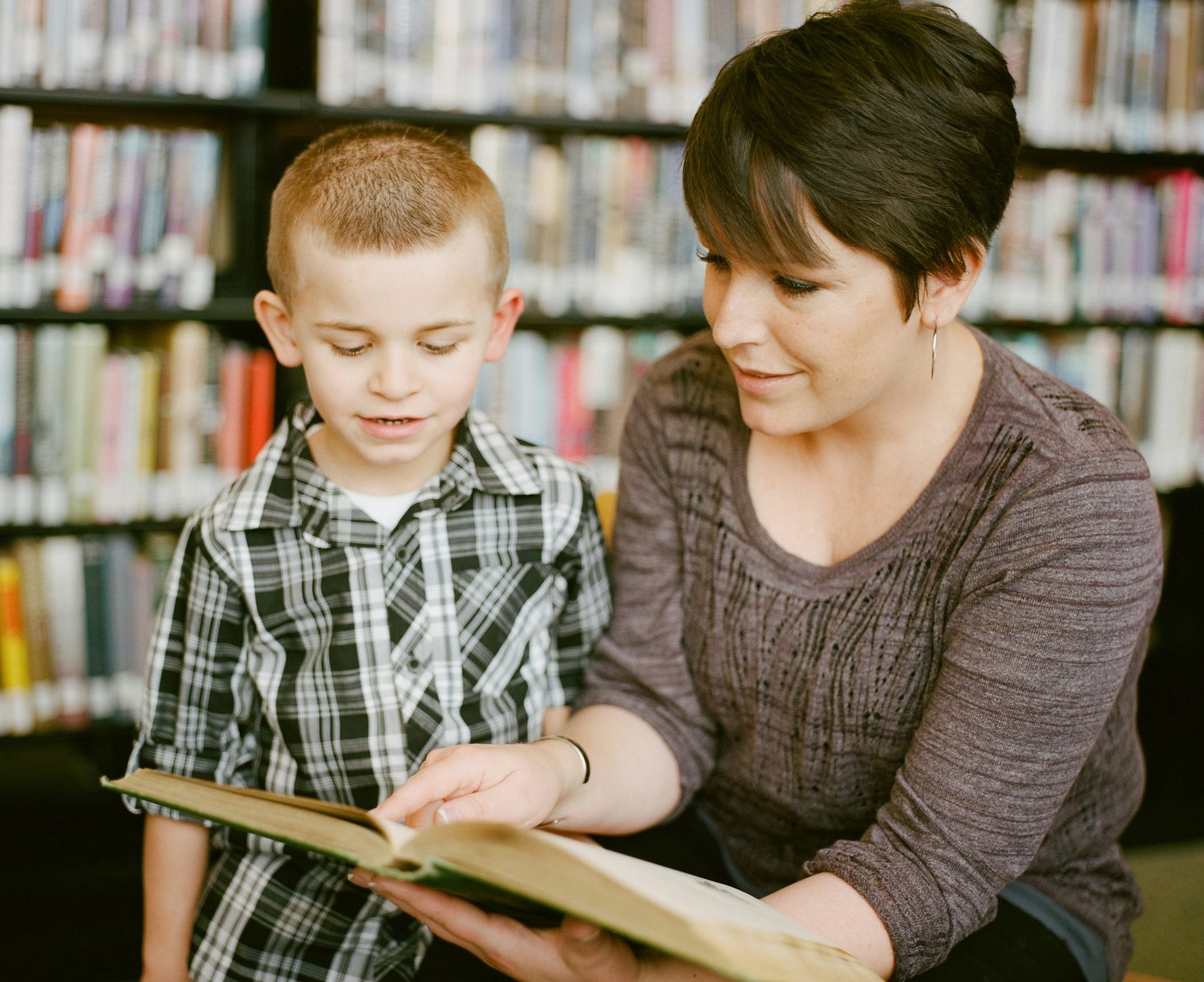
- Apples by Gail Gibbons
- Applesauce Season by Eden Ross Lipson
- How do Apples Grow? by Betsy Maestro
- How to Make an Apple Pie and See the World by Marjorie Priceman
- Apples, Apples, Apples by Nancy Elizabeth Wallace
- Ten Red Apples by Pat Hutchins
- The Apple Pie Tree by Zoe Hall
- Apple Farmer Annie by Monica Wellington
Family Fun: Apple Taste Test
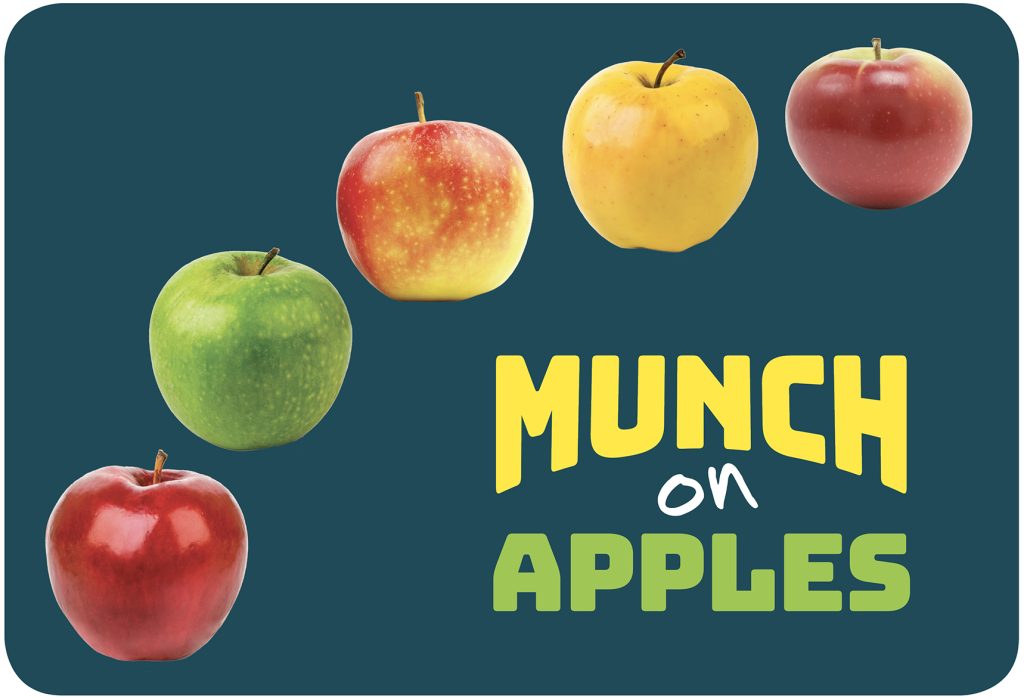
Gather a few apples of different colors, shapes, and sizes. Ask your child how the apples are the same and different. Encourage your child to use their five senses to look at, smell, touch, taste, and hear the crunch of the apples. Share the name of each one. Which apple is his or her favorite today? Use the extra apples to make homemade applesauce!
Garden Connection
Planting
Apples grow into trees from seeds or from a technique called grafting, where a branch of one apple tree is attached to another tree. Grafting allows farmers to experiment with growing different varieties of apples. Growing apples requires planting more than one variety for pollination. You also need patience because apple trees take four or five years to produce their first fruit!
Harvesting
Apple harvest occurs in the fall. When selecting apples that are already picked, choose firm, shiny, smooth-skinned apples with intact stems. Apples should smell fresh, not musty.