Harvest of the Month: Cabbage
Click buttons below to explore other winter fruits and veggies:
Facts
Nutrition and Seasonality
Key Nutrients
- Folate – Helps prevent birth defects, is needed to make DNA, and helps your cells divide, including red blood cells.
- Vitamin C – Helps wounds heal, is important for the immune system, and is an antioxidant, which protects cells from damage.
- Vitamin K – Needed for blood clotting, preventing excessive bleeding.
Seasonality
- Fresh cabbage grown in Wisconsin is available from mid-June through late October.
Try New Foods
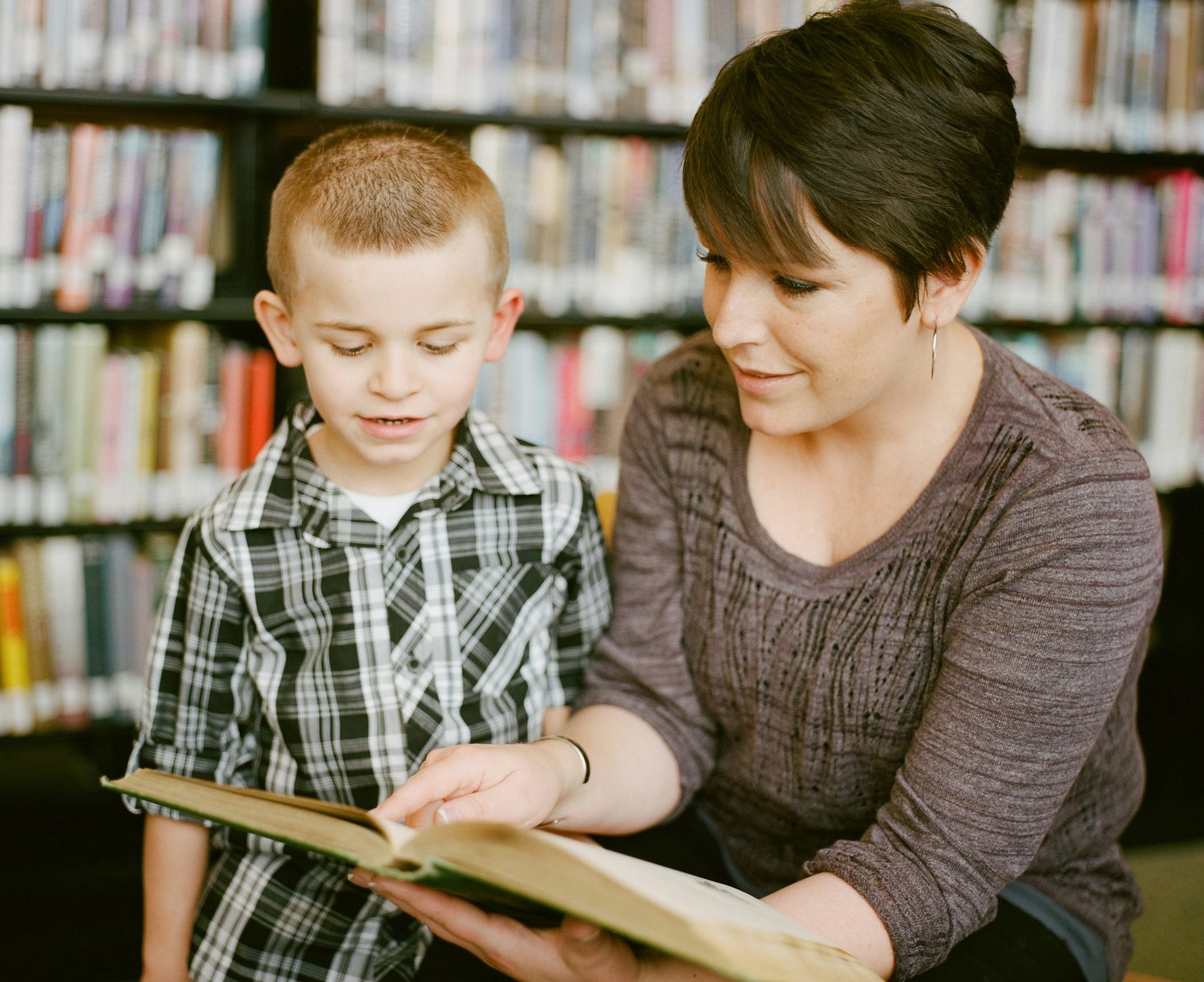
Offer your children new foods. Then, let them choose how much to eat. Children are more likely to enjoy new foods when eating them is their own choice.
This is a pre-existing electronic document and is not accessible. PDFs are intended for print. To request an accessible version or a reasonable accommodation due to disability, please email emily.latham@wisc.edu.
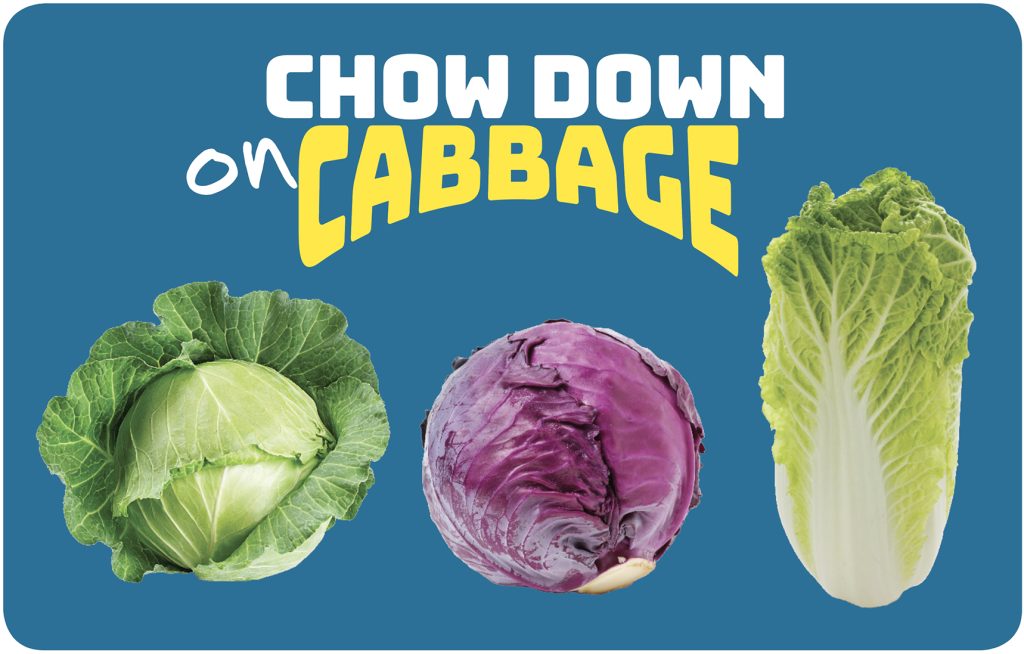
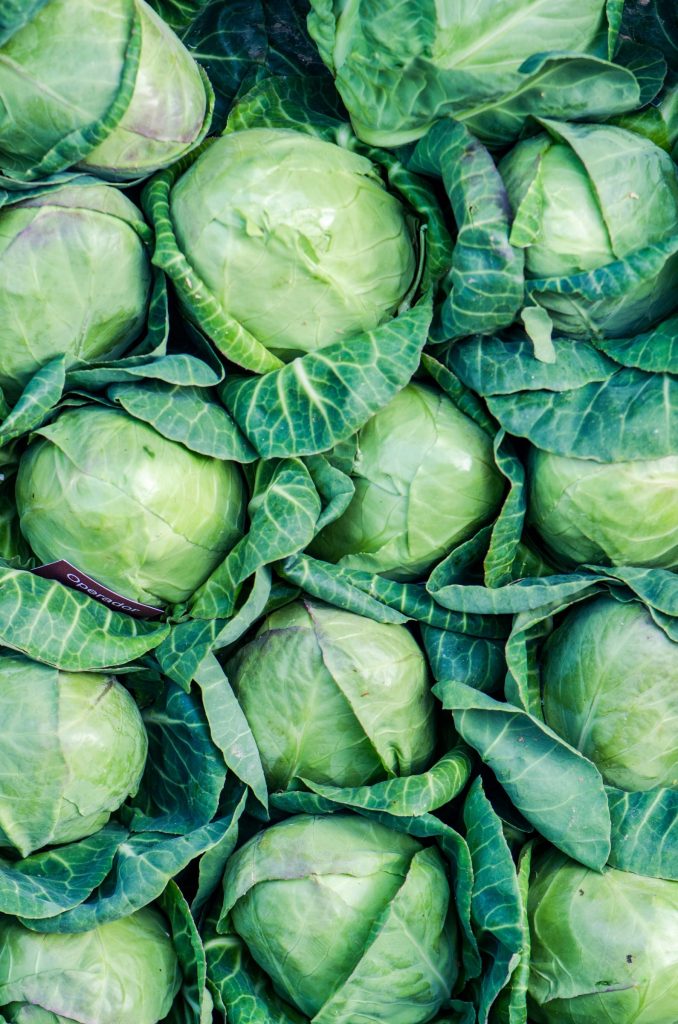
- Select: Choose cabbage heads with compact leaves.
- Store: Tightly wrap in plastic and refrigerate for up to 7 days.
- Prepare: Carefully run a small knife around the core to remove it. Slice or chop the leaves.
Add Cabbage to Your Favorite Family Meals
- Add cabbage to your favorite veggie soup, stew, or stir fry.
- Use cabbage leaves as a tortilla or wrap.
- Add raw cabbage to salad.
Books
- Cabbage and Kings by Elizabeth Seabrook
- Katie’s Cabbage by Katie Stagliano
- The Giant Cabbage by Cherie Stihler
- Cabbage Moon by Tim Chadwick
- The Cabbage Soup Solution
by Erika Oller
Family Fun: Cabbage Exploration
Ask kids to observe the cabbage whole. Have an adult cut the cabbage lengthwise to show the center “tree”. Peel each layer of cabbage leaves off one by one. How does the tree change? Do the leaves feel or taste different as you move toward the center of the cabbage?
Garden Connection
Planting
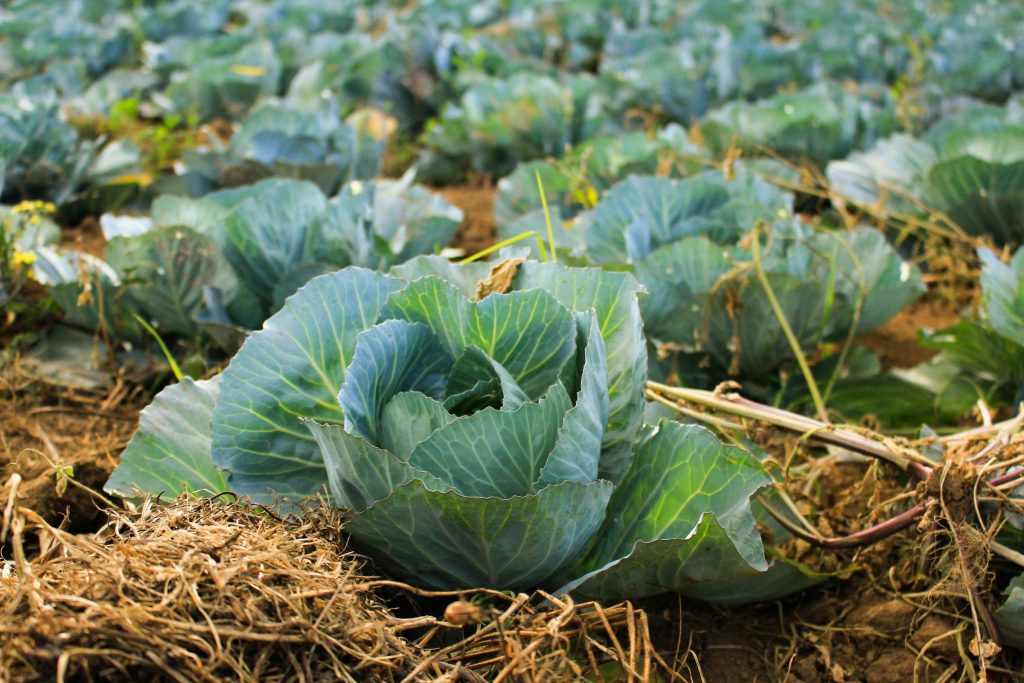
Cabbage enjoys cool weather. Plant in the early spring or mid-summer for a fall harvest. Cabbage may be transplanted or seeded directly in the garden. Cabbage is a biennial plant, which means it completes its life cycle in two growing seasons. During the first season the plant grows leaves, in this case, the head of cabbage. If the cabbage is not harvested, then the following growing season it will produce a flower stalk and seeds.
Harvesting
Harvest cabbage any time after the head forms. Make sure the cabbage heads are solid (firm to hand pressure), but harvest before they crack or split. To harvest, cut the cabbage stem close to the head. Cabbage plants only produce one head per growing season. Fresh cabbage from the garden looks different from cabbage purchased at the store. Cabbage heads from the garden have many open leaves that can be eaten. These are the first leaves to appear as the cabbage head grows. When cabbage is purchased at the store these leaves have been removed so you only see the tight head.