Harvest of the Month: Carrots
Click buttons below to explore other winter fruits and veggies:
Facts
Nutrition and Seasonality
Key Nutrients
- Beta-carotene – Carrots are best known for being an excellent source of beta-carotene. Our bodies turn beta-carotene into Vitamin A, which is important for keeping your skin and bones healthy, resisting and fighting infection, and good eyesight.
- Potassium – Helps maintain normal blood pressure.
- Vitamin K – Needed for blood clotting, preventing excessive bleeding.
Seasonality
- Fresh carrots grown in Wisconsin are available from mid-July through October. Carrots can be stored through winter.
Try New Foods
Be a healthy role model. Your kids learn from watching you. Eat fruits and vegetables for meals and snacks and your kids will too.
This is a pre-existing electronic document and is not accessible. PDFs are intended for print. To request an accessible version or a reasonable accommodation due to disability, please email emily.latham@wisc.edu.
- Select: Choose smooth and firm carrots with a deep color and fresh, green tops.
- Store: Remove green tops and refrigerate in a plastic bag for up to 2 weeks.
- Prepare: Scrub under running water to remove dirt. Peel if desired.
Add Carrots to Your Favorite Family Meals
- Add shredded carrots to salads, slaw, or sandwiches.
- Roast carrots and serve as veggie fries.
- Bake with carrots! Add shredded or cooked and mashed carrots to muffins, cakes, and cookies.

Books
- The Giant Carrot by Jan Peck
- Carrot Soup by John Segal
- The Carrot Seed by Ruth Krauss
- Tops and Bottoms by Janet Stevens
- Carrots Grow Underground by Mari Schuh
- Carrots by Inez Snyder
- Oliver’s Vegetables by Vivian French
- The Life Cycle of a Carrot by Linda Tagliaferro
Family Fun: Taste a Rainbow
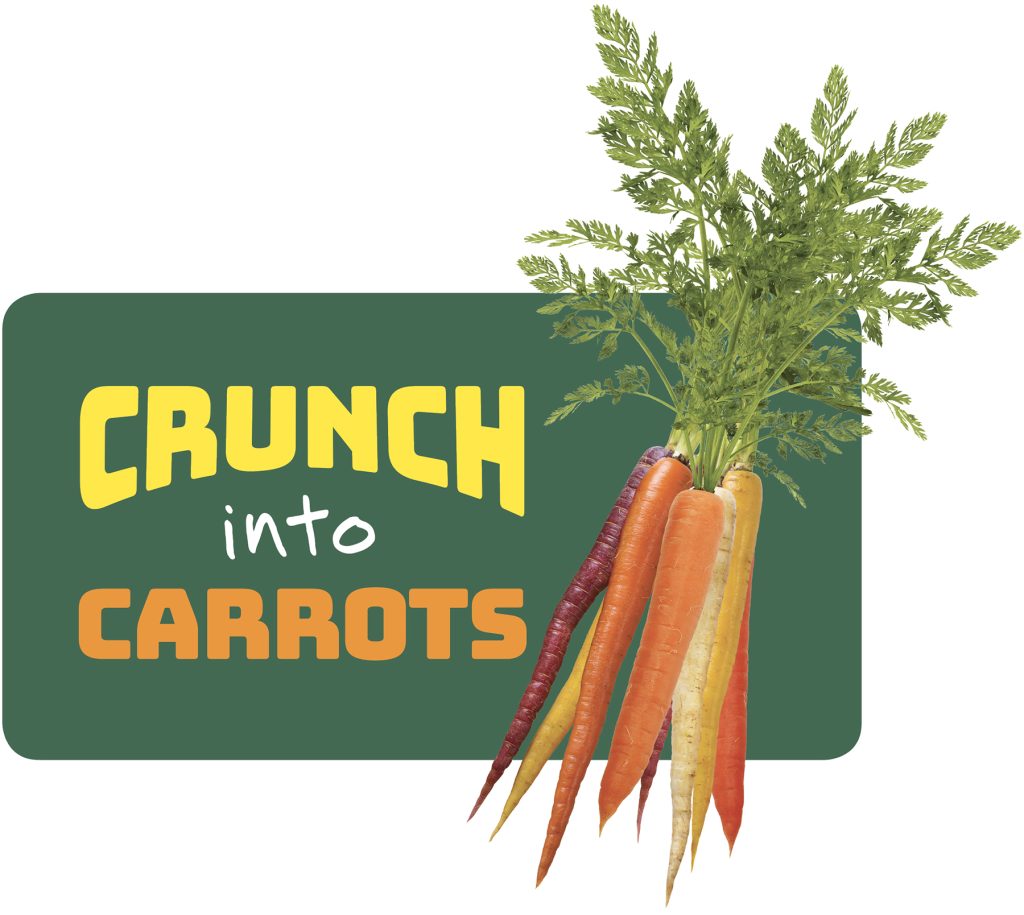
Gather different colored carrots (purple, yellow, white, red, or orange). Do they all taste the same? Are any colors sweeter? Roast a few and compare raw versus roasted carrots. Draw a picture of your favorite color carrot and share a photo on Facebook using #WIHarvestoftheMonth!
Garden Connection
Planting
Plant carrot seeds in early spring. Carrot seeds are very small and difficult to space evenly (½ inch apart). Mixing the seeds with some coarse sand or dried coffee grounds before planting makes it easier to space seeds. Carrots are biennial, meaning they have a two-year life cycle. In the first year, the edible root is formed, which we eat. In the second year, the plant grows larger foliage and produces flowers and seeds. Consider leaving a carrot over the winter to see the carrot’s interesting flower in the summer.
Harvesting
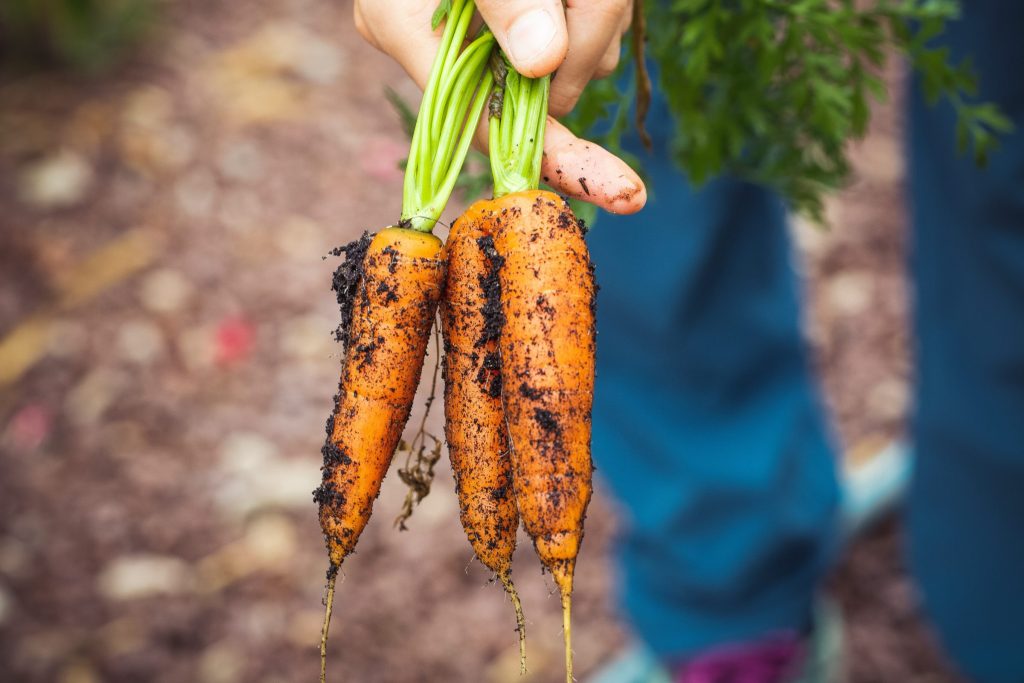
Harvest carrots when the roots are at least 1/2 inch thick (1-2 inches is ideal). To harvest carrots safely, loosen the soil carefully around your carrots, then pull the carrots out by hand.