Harvest of the Month: Potatoes
Click buttons below to explore other winter fruits and veggies:
Facts
Nutrition and Seasonality
Key Nutrients
- Vitamin B6 – Important for immune system and brain function and helps you get energy from your food.
- Vitamin C – Helps wounds heal, is important for the immune system, and is an antioxidant, which protects our cells from damage.
- Potassium – Helps maintain normal blood pressure.
Seasonality
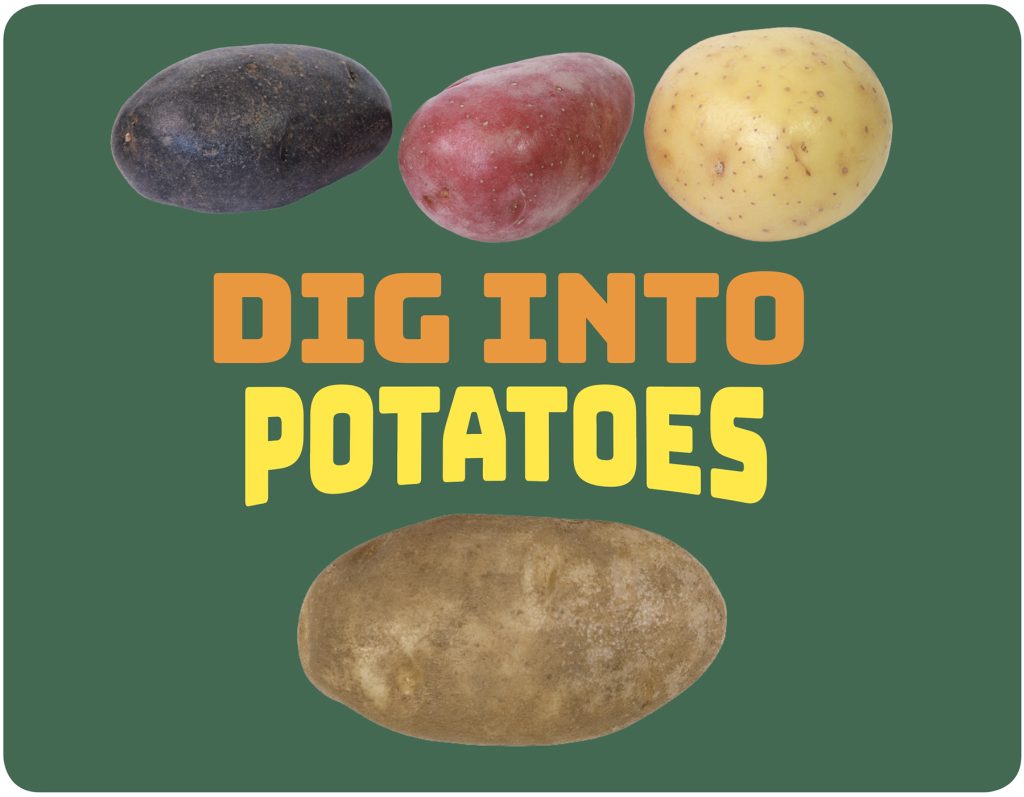
- Fresh new red potatoes grown in Wisconsin are available from mid-June to August. White potatoes are available August through October. Potatoes can be stored through winter.
Try New Foods
Children are more likely to try new foods if they help prepare them.
Children can:
- Scrub potatoes under cool running water
- Mash potatoes
- Sprinkle seasoning on
- homemade potato wedges
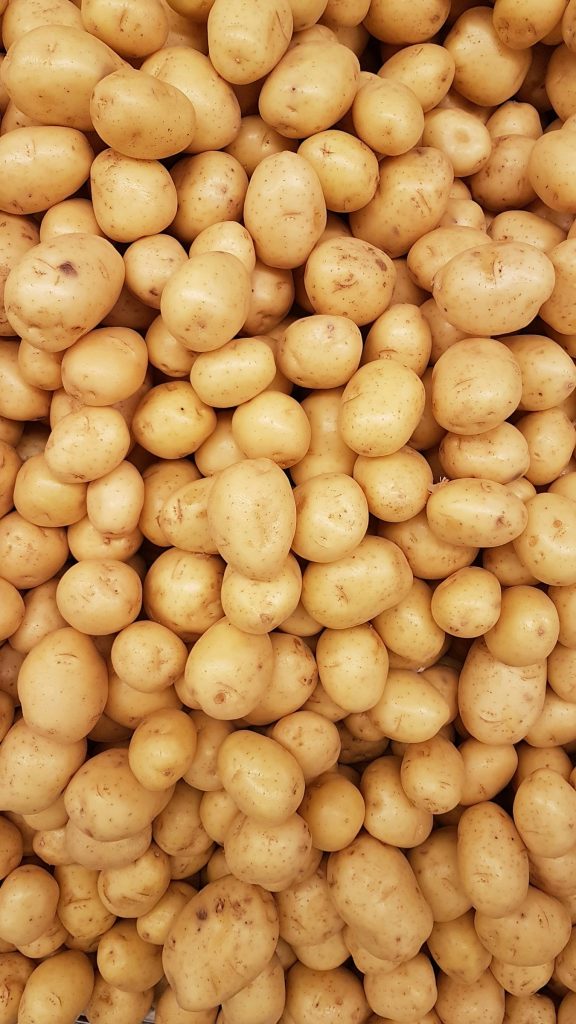
- Select: Choose clean, smooth, firm-textured potatoes with no cuts, bruises, or discoloration.
- Store: Store potatoes in a cool place with air flow. Do not refrigerate, freeze, or place in direct light.
- Prepare: Rinse carefully under cool running water and allow it to dry well.
Add Potatoes to Your Favorite Family Meals
- Add cubed potatoes to soups and stews.
- Toss cooked, cubed potatoes with fresh garlic, lemon juice, salt and pepper.
- Make homemade potato wedges. Cut potatoes into wedges, toss with oil and seasonings, and bake 400°F for 20-30 minutes until tender and golden brown.

Books
- Growing Vegetable Soup by Lois Ehlert
- Tops and Bottoms by Janet Stevens
- The Vegetables We Eat by Gail Gibbons
- Jamie O’Rourke and the Big Potato: An Irish Folktale Board Book by Tomie dePaola
Oven Potato Wedges
Scrub 3 medium potatoes and pat dry. Cut potatoes into quarters. Cut each quarter into wedges. Toss potatoes in 3 Tbsp olive oil, salt and pepper to taste, and herbs of your choosing (rosemary, thyme, oregano, marjoram, or dill). Spread potatoes in a single layer on a baking sheet. Bake at 400°F for 20-30 minutes until tender and golden brown. Flip wedges over about halfway through baking. Serve with your favorite dip!
Garden Connection
Planting
Potatoes are one of the earliest vegetables planted in the garden. Most vegetables grow from seeds, but not potatoes! Potatoes grow from “eyes” on seed potatoes. Seed potatoes may be small whole potatoes or potatoes that are cut into pieces. Each seed potato should have at least one good “eye”. Dig a furrow 1-3 inches deep. Place seed potatoes with eyes up, 10-12 inches apart and cover with soil.
Harvesting
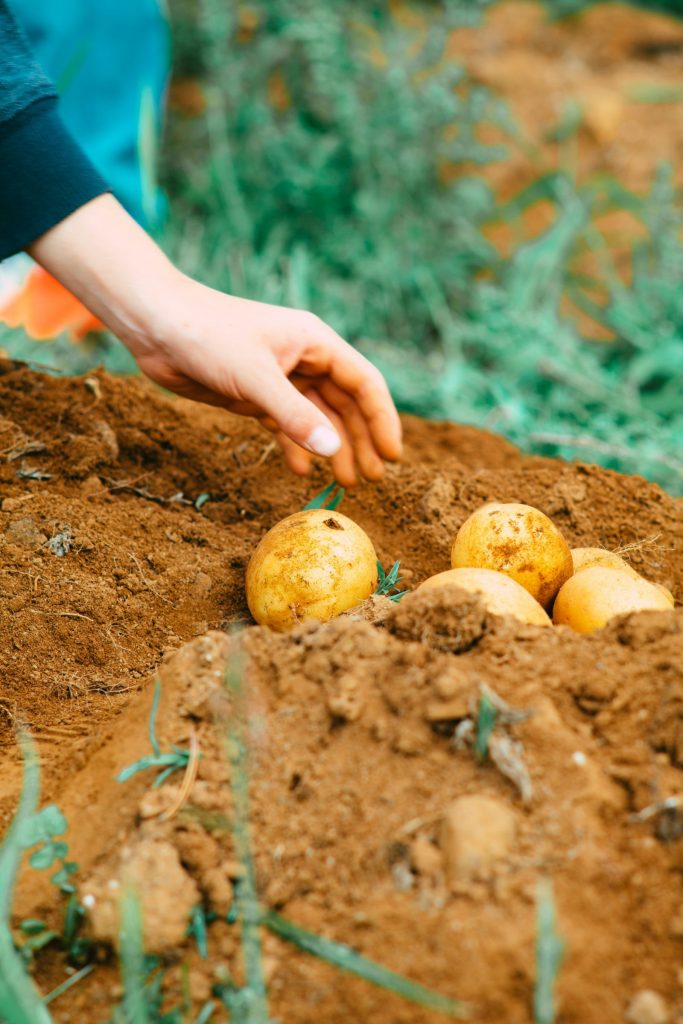
Harvest potatoes when the tops of the plants have died and the ground is dry. Dig up the potatoes like buried treasure, making sure not to bruise them.